
Проф. др Вилијам Хејворд из Хонг Конга посетио Филозофски факултет
Опште
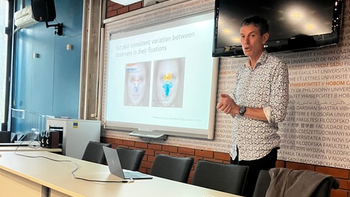
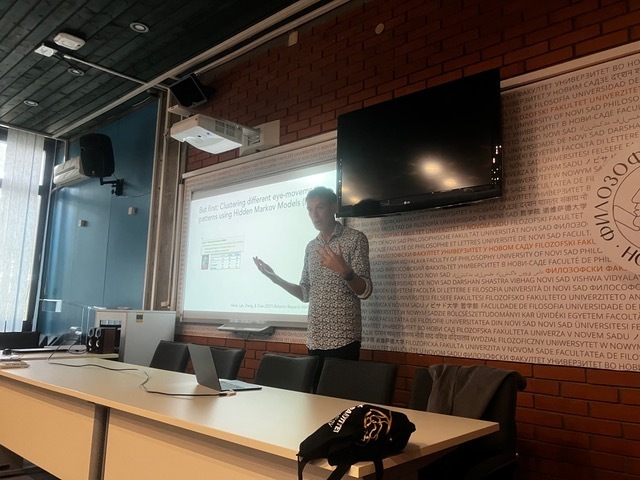
Проф. др Вилијам Хејворд (William Hayward), са Универзитета Лингнан из Хонг Конга, 13. маја 2026. године посетио је Филозофски факултет као гост Лабораторије за експерименталну псхилогију. Професор Хејворд, иначе декан Факултета друштвених наука и професор психологије, одржао је занимљиво предавање под називом "Idiosyncratic eye-movement patterns when viewing faces" (Идиосинкратични обрасци покрета очију приликом посматрања лица) за чланове ЛЕП-а.
О предавачу
Професор ВИЛИЈАМ ХЕЈВОРД је декан Факултета друштвених наука и професор психологије на Универзитету Лингнан.
Пре него што се придружио Лингнану, био је декан Факултета друштвених наука на Универзитету у Хонг Конгу и шеф Одсека за психологију на Универзитету у Окланду, Нови Зеланд, као и предавач на Кинеском универзитету у Хонг Конгу и Универзитету у Волонгонгу, Аустралија.
Рођен је на Новом Зеланду; завршио је основне и мастер студије на Универзитета у Кентерберију, психологију је докторирао на Универзитету Јејл, у САД. Професор Хејворда се бави когнитивном психологијом и когнитивним неуронаукама, а истраживачки фокус му је на питању како разумемо света око нас кроз визуелне информације. Аутор је бројних чланака у престижним научним часописима, водио је бројне пројекте, организовао важне конференције и менторисао велики број докторских и мастер теза.
Abstract:
Faces all show the same basic facial features in the same general arrangement, but observers do not all adopt the same eye-movement patterns when looking at them. Research from a number of independent labs shows that people show differences in their preferred positions of the first few fixations on a face, with some people preferring to fixate higher on the face, typically around the eyes, and others preferring to fixate lower on the face, around the nose and mouth. In our lab, we have been interested in several aspects of this phenomenon. First, we examined whether classic face perception demonstrations, such as the composite face effect, were affected by these idiosyncratic fixation patterns (Zhong, et al., 2023). Second, we conducted two experiments that demonstrated how face-viewing preferences affect face- sensitive event-related potentials (ERPs) (Zhong, et al., under review). Third, we examined whether we could shift observers’ preferences by manipulating the information available for them at study (specifically, biasing them to focus on the eyes of a face when encoding it) (Zhong et al., in preparation). Finally, we have been examining whether differences in social anxiety are associated with such differences in fixation patterns for faces between individuals (Xie, et al., in preparation). Taken together, this programme of research shows that these idiosyncratic patterns of fixation to faces have subtle but observable effects on cognitive and neural processing of faces, and appear to have relationships with other psychological variables.