
Prof. dr Vilijam Hejvord iz Hong Konga posetio Filozofski fakultet
Opšte
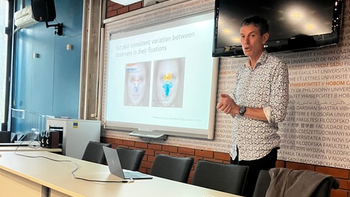
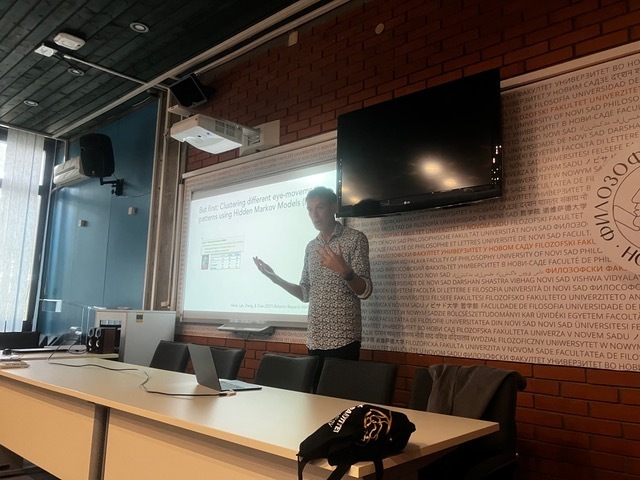
Prof. dr Vilijam Hejvord (William Hayward), sa Univerziteta Lingnan iz Hong Konga, 13. maja 2026. godine posetio je Filozofski fakultet kao gost Laboratorije za eksperimentalnu pshilogiju. Profesor Hejvord, inače dekan Fakulteta društvenih nauka i profesor psihologije, održao je zanimljivo predavanje pod nazivom "Idiosyncratic eye-movement patterns when viewing faces" (Idiosinkratični obrasci pokreta očiju prilikom posmatranja lica) za članove LEP-a.
O predavaču
Profesor VILIJAM HEJVORD je dekan Fakulteta društvenih nauka i profesor psihologije na Univerzitetu Lingnan.
Pre nego što se pridružio Lingnanu, bio je dekan Fakulteta društvenih nauka na Univerzitetu u Hong Kongu i šef Odseka za psihologiju na Univerzitetu u Oklandu, Novi Zeland, kao i predavač na Kineskom univerzitetu u Hong Kongu i Univerzitetu u Volongongu, Australija.
Rođen je na Novom Zelandu; završio je osnovne i master studije na Univerziteta u Kenterberiju, psihologiju je doktorirao na Univerzitetu Jejl, u SAD. Profesor Hejvorda se bavi kognitivnom psihologijom i kognitivnim neuronaukama, a istraživački fokus mu je na pitanju kako razumemo sveta oko nas kroz vizuelne informacije. Autor je brojnih članaka u prestižnim naučnim časopisima, vodio je brojne projekte, organizovao važne konferencije i mentorisao veliki broj doktorskih i master teza.
Abstract:
Faces all show the same basic facial features in the same general arrangement, but observers do not all adopt the same eye-movement patterns when looking at them. Research from a number of independent labs shows that people show differences in their preferred positions of the first few fixations on a face, with some people preferring to fixate higher on the face, typically around the eyes, and others preferring to fixate lower on the face, around the nose and mouth. In our lab, we have been interested in several aspects of this phenomenon. First, we examined whether classic face perception demonstrations, such as the composite face effect, were affected by these idiosyncratic fixation patterns (Zhong, et al., 2023). Second, we conducted two experiments that demonstrated how face-viewing preferences affect face- sensitive event-related potentials (ERPs) (Zhong, et al., under review). Third, we examined whether we could shift observers’ preferences by manipulating the information available for them at study (specifically, biasing them to focus on the eyes of a face when encoding it) (Zhong et al., in preparation). Finally, we have been examining whether differences in social anxiety are associated with such differences in fixation patterns for faces between individuals (Xie, et al., in preparation). Taken together, this programme of research shows that these idiosyncratic patterns of fixation to faces have subtle but observable effects on cognitive and neural processing of faces, and appear to have relationships with other psychological variables.